
Covina City Directory Shelves and Editions
The Covina collection search starts with a split shelf, not one complete online run. Allen County Public Library Genealogy Center catalog references identify Covina volumes for 1947, 1949, and 1950. A Baldwin Park, Covina and West Covina regional directory is identified for 1955. The publisher is not verified in the catalog evidence available, so the title and year should be copied exactly before a request is made. Catalog, digitized, and film availability can change, which makes a librarian's confirmation part of the source record.
| Collection | Years / editions | Where held | Access |
|---|---|---|---|
| Covina city directories | 1947, 1949, 1950 | Allen County Public Library references | Confirm catalog, digitized, or film access |
| Baldwin Park, Covina and West Covina directory | 1955 | Genealogy-library catalogs and FamilySearch ecosystem | Confirm catalog or film availability |
| Covina and nearby cities address directory, GTE | September 1989 | LA County Library Californiana, Norwalk | Onsite address-first research |
| Pomona and nearby communities address directories | 1990-1993 examples | LA County Library Californiana | Regional coverage; check each edition |
| San Gabriel Valley East white and yellow pages | 2000-2007 examples | LA County Library Californiana | Late telephone and business continuity |
| Federal census | 1900-1950 | NARA and genealogy databases | Public schedules and household context |
The runs do not promise a year-by-year answer for every Covina street. Some are alphabetical, some are reverse address volumes, and regional books reach beyond incorporated city limits. The census row is a companion, adding relationships, age, birthplace, occupation, tenure, and address clues.
The Covina Public Library resources page is the right local starting point for newspaper, photograph, yearbook, obituary, telephone-book, and subscription-database questions. Ask for physical directory years separately from remote databases, because the library does not publish an itemized online shelf list.
The verified regional holdings are described in the LA County Library Californiana directory inventory. For the local shelf contact, use Covina Public Library resources.
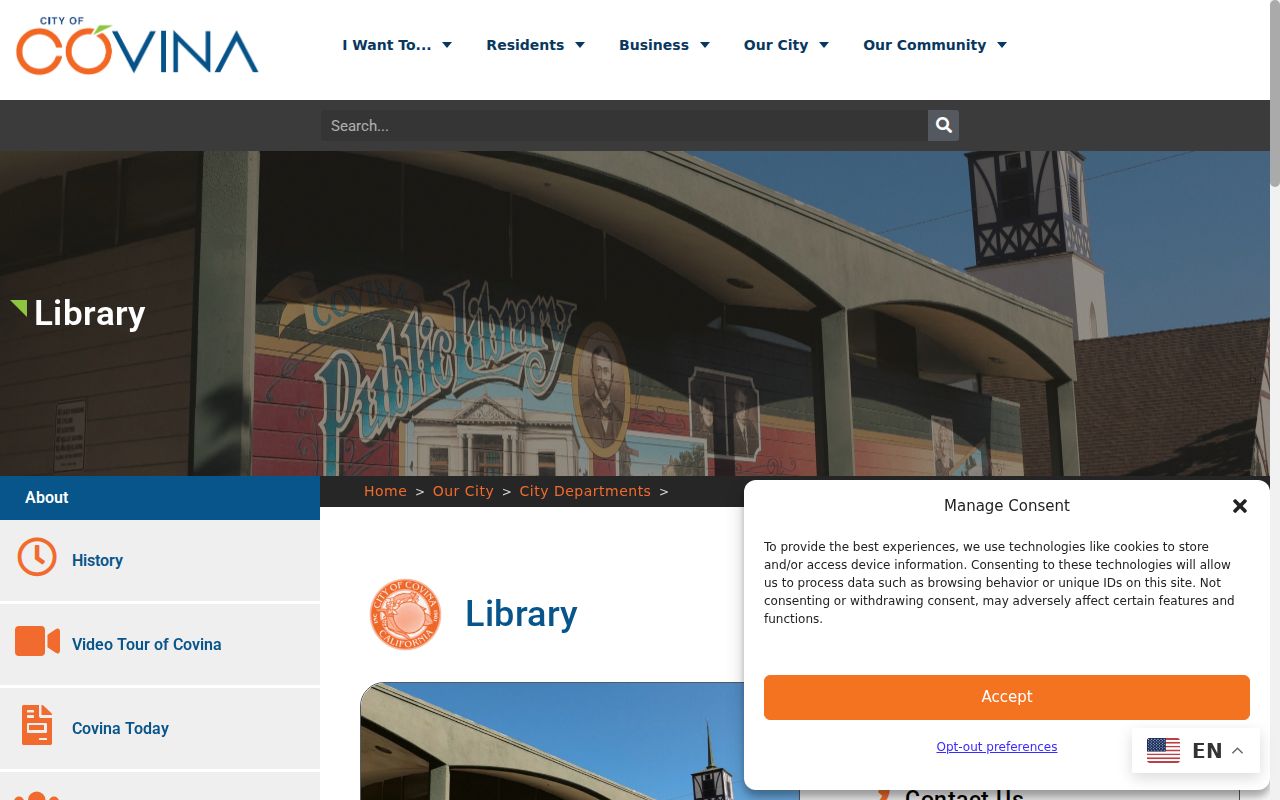
The Covina library image points to a local reference route for collections that may sit in print, microfilm, or a subscription database rather than on an open web page.
Regional Titles Hide Covina City Directories
A catalog search limited to titles that begin with “Covina” can miss useful directory coverage. The 1955 volume joins Baldwin Park and West Covina. Later address books use “Covina and nearby cities,” Pomona-area wording, or San Gabriel Valley East. Telephone exchange and postal service areas crossed municipal lines, so a Covina household may be filed in a regional product even when the address sits in the city.
Regional-title drift matters most when a name disappears. Search the neighboring title and inspect its street section before concluding that a household was absent. Compare the city name, cross street, telephone exchange, and nearby entries. Regional coverage need not match Covina's planning boundary in Los Angeles County.
Note: A catalog title beginning with Covina can miss useful volumes filed under Baldwin Park, Pomona, nearby cities, or San Gabriel Valley East.
Californiana Access for Covina City Directories
LA County Library Californiana in Norwalk is the strongest verified local shelf for reverse Covina work. Its inventory lists GTE September 1989, Pomona-area 1990-1993 examples, and San Gabriel Valley East 2000-2007 examples. Coverage varies, and the inventory is not a public web search.
Plan an onsite visit around the title and edition. Bring the street, house-number range, spelling variants, and the goal: name-to-address or address-to-subscriber. Ask staff to check alphabetical and reverse formats, and whether a volume is open, reader-only, or catalog-only.
How Covina City Directory Entries Read
A Covina entry is a compact snapshot. An alphabetical line may start with a surname, given name, or initial, then add a spouse, occupation, employer, residence, and telephone. An address-first line usually puts the street and house number first, followed by a listed subscriber or occupant. Symbols and abbreviations depend on the publisher, so the title page, copyright page, and abbreviation key belong in the research notes.
| Name | Surname, given name, initials, and sometimes a spouse in parentheses |
|---|---|
| Household clue | Spouse, widow notation, or a second adult at the same address when listed |
| Occupation | Historical occupation or business role, with an employer when the publisher supplied one |
| Address | House number and street; a telephone may appear in telephone-oriented editions |
| Owner or renter mark | A publisher's symbol or letter, if that edition uses one |
Read every mark in context. “Wid” can be a genealogy clue, while “r” may indicate residence or rooms depending on the key. Do not expand an abbreviation from memory. A business address and residence are not the same parcel.
- Criss-cross directory
- A reverse section arranged by street and house number, useful for moving from an address to a listed subscriber.
- Householder index
- An index that points to a household head or primary resident, not every person who lived at the address.
- Abbreviation key
- The publisher's legend for short forms and symbols; photograph or transcribe it before interpreting entries.
Criss-Cross Pages in Covina Volumes
Alphabetical and criss-cross formats answer different questions. An alphabetical Covina volume starts with a person and may lead to a street address. A criss-cross or address directory starts with a street and house number, then points to a listed subscriber or occupant. The September 1989 GTE volume is especially useful for that reverse direction, while the 1947, 1949, 1950, and 1955 leads may need a catalog check to confirm whether a street section is present.
Scan neighboring house numbers rather than copying one line in isolation. A skipped number can reflect a vacant lot, a multifamily property, a service boundary, or an unlisted household. A listed telephone subscriber is not proof of every person living there. Compare the entry with the 1950 census, a permit, a deed, or a newspaper item before treating a name as a settled identity.
Note: A reverse directory is strongest for a dated address clue, while an alphabetical volume is strongest for finding an address from a known name.
Pair Covina Directories with the 1950 Census
The 1950 federal census is the best public household companion to the mid-century Covina city directory leads. A directory can provide an address, a spouse clue, and a short occupation line. The census can add relationship, age, birthplace, occupation, and owner-or-renter information. The two sources were created for different purposes, so a small mismatch in spelling or household order deserves review rather than a quick rejection.
- Copy the directory entry exactly, including initials, spouse notation, street spelling, number, telephone, and every publisher mark.
- Search the 1950 census by name and location, then compare the household address, relationship, age, birthplace, occupation, and tenure.
- Check the prior and next available directory lead to see whether the name, address, or household composition changes.
- Record a cautious date range, such as “present by” or “listed through,” instead of turning a first or last listing into an exact move date.
- Use an obituary, probate file, deed, or permit to test a move, death, inheritance, or physical change.
The Census Bureau's decennial census materials provide the official context for released schedules and census products. A census household is still not a complete modern resident list, and protected or missing schedules can leave a gap.
Closed 1960 Census Gap for Covina
The 1950 schedules became available in 2022 under the federal 72-year rule. Individual 1960 schedules remain closed until 2032. That gap is important for Covina family history because the 1955 regional directory sits just before it, while the September 1989 GTE address directory sits decades later. A vanished name does not prove a move, death, or address change when the missing census decade is the only expected bridge.
Use the records that remain open. Deeds can establish ownership changes, permits can date alterations, newspapers can connect names and addresses, and probate or obituaries can explain an inheritance or death. Covina's public-records archive identifies council legislation from 1980 forward and building permits searchable by street address, although the city notes that the Laserfiche archive is undergoing maintenance and adjustments.
| Period | Research bridge |
|---|---|
| 1886 founding and 1901 incorporation | County land records first, then city municipal records |
| 1911 | Covina's first municipal building becomes a local records-history anchor |
| 1947-1955 | Directory entries paired with the 1950 census |
| 1950 released in 2022 | Household relationships and tenure fill mid-century clues |
| 1960 opens in 2032 | Until then, use deeds, permits, newspapers, probate, and directories |
The Firehouse/Jail Museum and Covina Record Memory
Covina's historical shelf is not limited to printed city directories. The Covina Valley Historical Society operates the Firehouse/Jail Museum behind City Hall and the H.H. Dorjean House. The Firehouse/Jail Museum occupies Covina's first municipal building, erected in 1911, when city administration, fire service, and policing were becoming local functions after incorporation.
For family history, the society is a lead for photographs, clippings, pioneer families, community organizations, school material, buildings, and local ephemera. Directory status and fees are not posted, so contact staff before assuming a file is indexed or digitized. The Covina Valley Historical Society is a better starting point for local-memory questions than a generic search for a missing directory page.
The Covina Valley Historical Society museum page documents the local-history setting behind the collection search.
The museum image reinforces why a Covina address can have useful evidence outside a city directory, especially when a printed run has not been digitized.
Sanborn Maps and Covina Directory Gaps
Sanborn fire-insurance maps can help explain the physical setting around an old Covina address, but no Covina-specific edition year was verified in the official Library of Congress catalog during research. The Library of Congress Sanborn searching guide is therefore a search aid, not evidence that a particular Covina sheet exists.
When a map is found, read it for building footprint, use, construction material, and site arrangement. It does not identify every occupant. Pair a map with a city directory, a legal description, a permit, or a newspaper. Do not invent a Sanborn date to fill a directory gap, and do not treat an old street label as a current parcel identity without checking the legal description.
Note: No authoritative Covina-specific Sanborn edition year or digitized official directory page was verified, so library and archive staff should confirm both.
The Library of Congress map-search page is the route for testing a historical map lead.
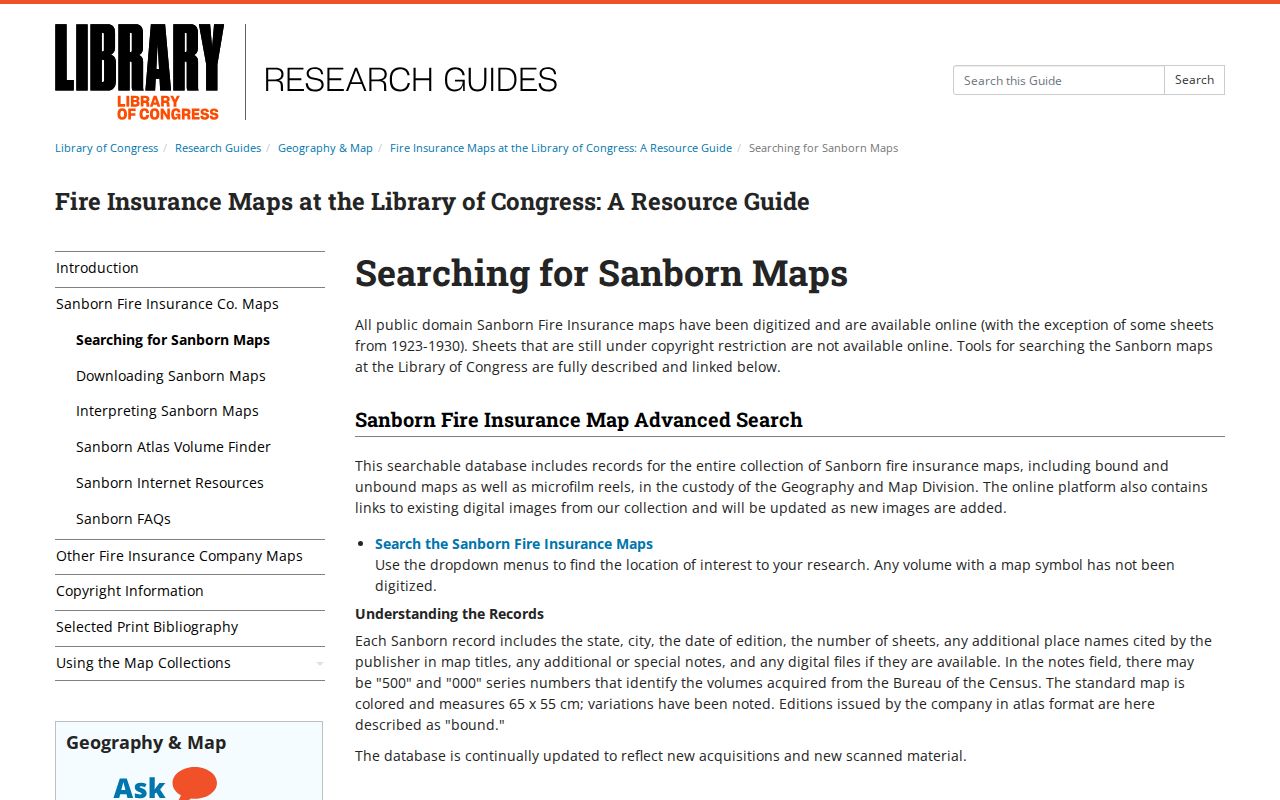
The map-guide image belongs beside the gap warning: physical context can be researched, but occupant identity still needs a directory or another record.
Follow a Covina Household Through City Directories
Begin with the strongest clue available. For a known person, search the 1947, 1949, 1950, or 1955 alphabetical lead and transcribe it. For a known house, start with the GTE address directory. Carry forward the street, number, spouse, initials, telephone, and owner or renter mark. The goal is a dated sequence, not an explanation for every gap.
Compare directory appearances with the 1950 census, then use later regional books only when the title and service area fit. A disappearance can mean a move, death, non-listing, a publication lag, or a change in telephone service. Newspapers, yearbooks, church directories, probate, and cemetery records can help distinguish those possibilities. School records and membership rolls may be protected, so use public officer or contact information rather than private rosters. The California State Archives catalog is a staff-assisted route for statewide indexes and transferred county material.
Covina's official history page provides the local background for interpreting older directory addresses.
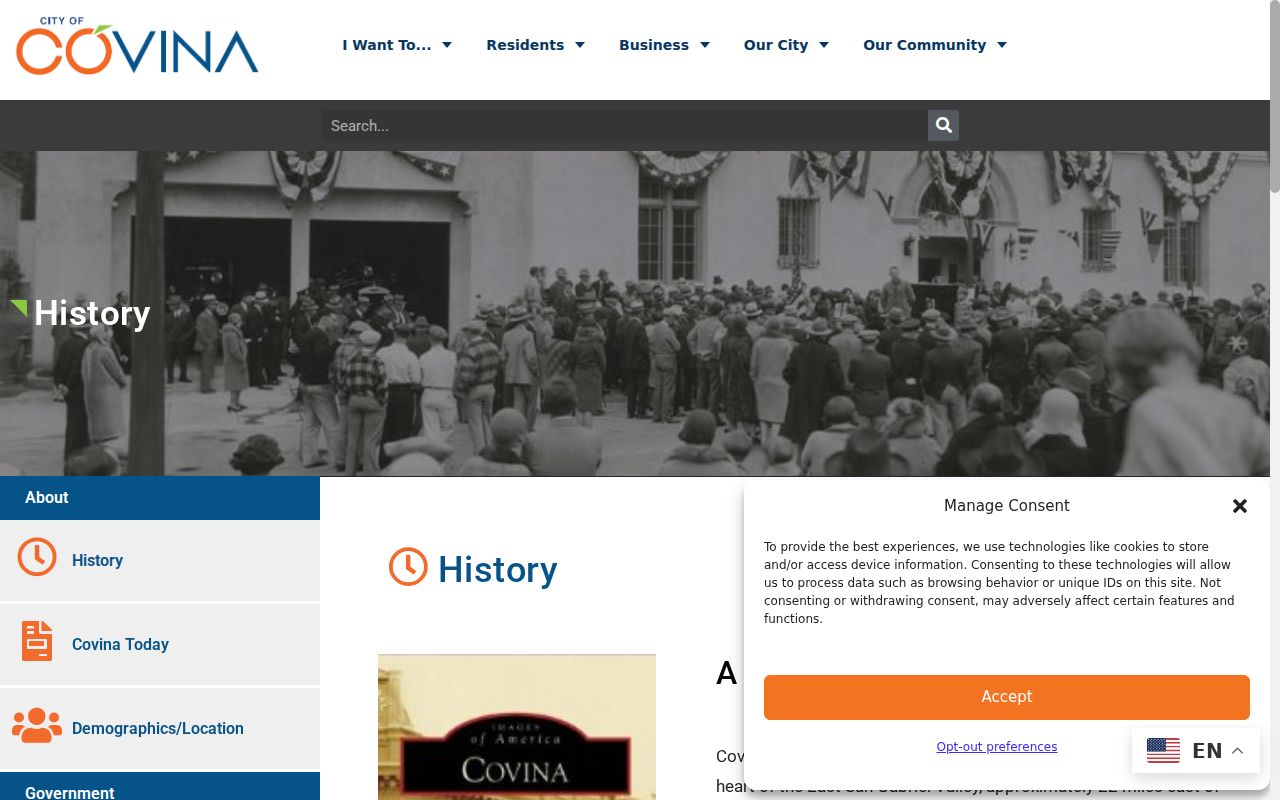
The history image closes the loop between a printed Covina city directory, a changing parcel landscape, and the county records that preserve earlier ownership.