
Finding Covina Residents Through the Right Record
A Covina residents directory search works best when the starting clue is clear. A street address belongs first with the Los Angeles County Assessor because the parcel roll can supply an AIN and an assessed owner where public display is allowed. A name tied to a court matter belongs in Los Angeles Superior Court's case tools. A business role belongs in the Secretary of State's filing system, while a professional role belongs with the California Department of Consumer Affairs. The Covina City Clerk handles municipal records, not county birth, death, or marriage certificates.
Those sources answer different questions. An assessment record supports a property connection, a deed records a legal transfer, and a city permit can identify an applicant or contractor. None is a complete list of people at a parcel. Keep the date, address, spelling, and record type together so a same-name hit does not become a false identity match.
- Write down the known clue: a name, address, event, business, court matter, or historical year.
- Use the Assessor Portal by address or AIN, then save the parcel identity and the difference between situs and mailing address.
- Use a likely assessed owner and recording year at the county recorder, since the deed index is not keyed to street address or APN.
- Confirm the name with CourtConnect, a license or business filing, an eligible vital-record copy, or a dated directory.
- Ask the City Clerk or another custodian for an identifiable record when the needed document is not online.
Offices Behind Covina Resident Records
Covina is an incorporated city in eastern Los Angeles County, but it is not a separate county-records jurisdiction. The offices below divide the work. The city keeps municipal legislation and permit material; Los Angeles County keeps deeds, assessment data, court files, and county vital records; California agencies keep statewide business, voter-status, license, and vital-record systems.
Covina City Clerk
City Hall
125 E. College Street, Covina, CA 91723
(626) 384-5400
Los Angeles County RR/CC
Real Estate Records
12400 Imperial Highway, Room 2207, Norwalk, CA 90650
(800) 201-8999, option 3
Los Angeles County Assessor
Public property portal
Address and AIN search modes
Assessed data and parcel links
California Elections Status
Self-verification tool
Name and date-of-birth identity inputs
Not an open resident roll
The recorder accepts known-document copy requests online, by mail, or at the counter. Covina requests can seek inspection or copies, while city staff direct county vital-record questions to RR/CC.
Why the Covina Assessor Comes First
The Assessor Portal is the dependable first stop for a Covina address. Search by street address and select the suggested location, or use the county's ten-digit Assessor Identification Number, commonly displayed in a 4-3-3 pattern. The parcel result may show situs, assessed party where legally displayed, values, exemptions, characteristics, and map links. A mailing address can differ from the physical situs, so it should be treated as a clue about correspondence, not proof of who lives there.
The interface is not a guaranteed owner-name search. Protected-person rules and display limits can suppress details. An AIN connects the assessment record to parcel maps and helps distinguish similar street text before a deed or permit search.
| Field label | Type | Required | Format or use |
|---|---|---|---|
| Search by Address | Text/autocomplete | One search mode | Street number and name, with city or ZIP as prompted; select a candidate. |
| Search by AIN | Segmented numeric text | One search mode | Los Angeles County's 10-digit AIN, conventionally shown 4-3-3. |
| Map/parcel navigation | Map click | No | Locate nearby parcels after finding the subject. |
| Search/submit | Button | Yes | Runs the selected query. |
| Reset/new search | Button | No | Clears the query. |
- Roll
- A custodian's organized list of records. The assessor roll groups parcels, assessed parties, values, and exemptions for an assessment year.
- Index
- A finding aid that names a record and gives fields such as party, year, type, or document number. It is not the full record image.
- Criss-cross directory
- An address-first directory arranged by street and house number, usually with a dated listed subscriber or occupant clue.
- Parcel
- A mapped land unit tracked by an AIN. One parcel can contain more than one structure or address.
Covina GIS for Resident Parcel Context
Covina's Public GIS zoning map adds the city view that an assessment card cannot provide. Open Search accepts an address choice, then the map can show General Plan Land Use, Planned Community Developments, Zoning, Specific Plans, the downtown cannabis-prohibited core, and overlay zones. Layer List controls use eye toggles, while Zoom, Home, and Legend make the parcel map easier to read.
Click the parcel and use popup arrows when layers overlap. Pan to adjacent parcels, but keep GIS in its proper role: planning and zoning, not an owner roll or resident list. County GIS-NET adds tract and parcel profiles outside the city.
The Covina GIS zoning map shows the parcel-and-layer setting behind an address search.
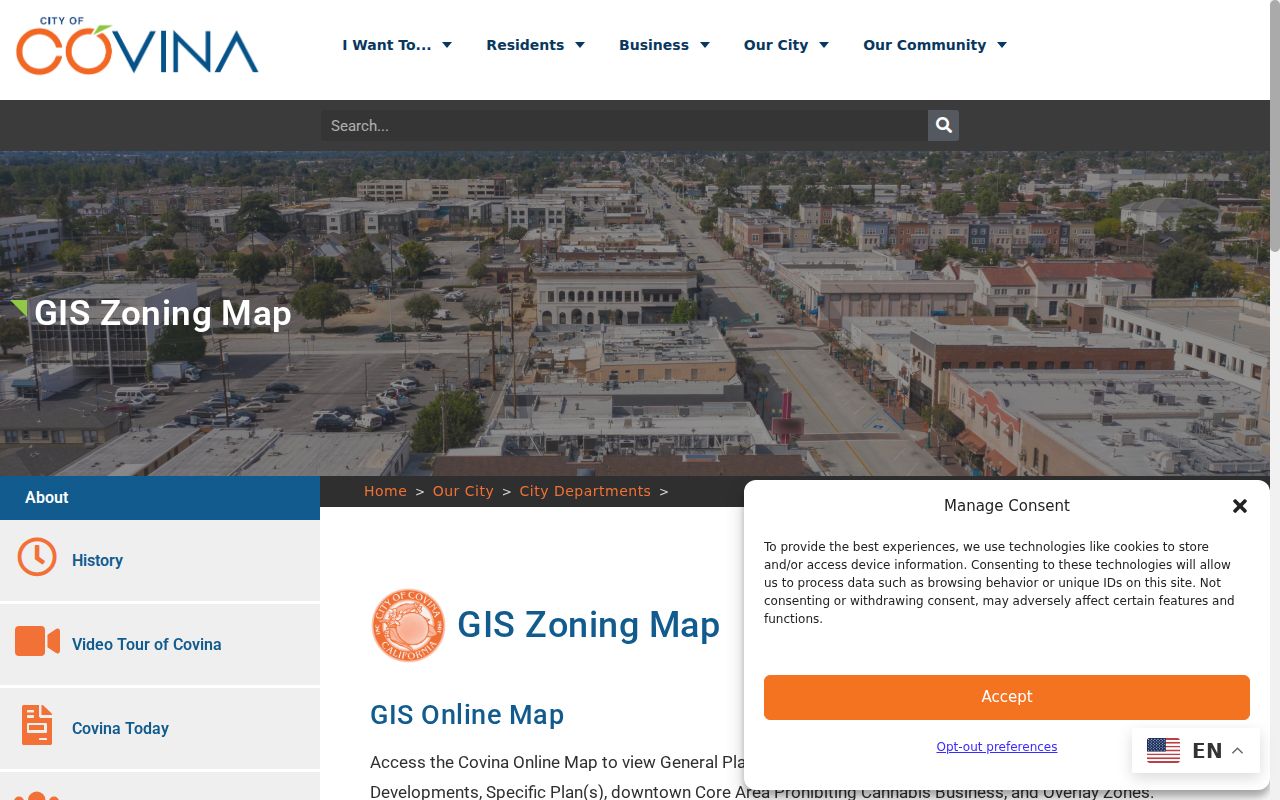
Reading the map beside the AIN helps separate a city parcel from nearby mailing territory and gives a reliable handoff to planning records.
Covina's Municipal Archive Adds Address Clues
The Covina City Clerk's Public Records page links to a free Laserfiche archive. City Council agendas, minutes, resolutions, and ordinances run from 1980 to the present. Building permits are searchable by street address and can add a project date, applicant, contractor, or work description. Planning files, hearing notices, and code-enforcement records may add related clues, with redactions where an exemption applies.
For material that is not posted, the city accepts a request for an existing record. The fillable Covina public-records request form identifies the subject, date range, department, and inspection or copy method. The city says a determination ordinarily comes within ten calendar days; unusual circumstances can add a written extension of up to fourteen days. After-hours requests count on the next business day.
- Online archive. Laserfiche categories and document browsing, with street-address searching for building permits.
- Formal request. Mail, email, or in-person submission for an identifiable city record.
- Inspection. Generally free under the California Public Records Act; copies can carry direct duplication costs.
- Records contact. cityclerk@covinaca.gov is published as a records and planning fallback.
The Covina Public Records archive identifies the Laserfiche and municipal-record entry points.
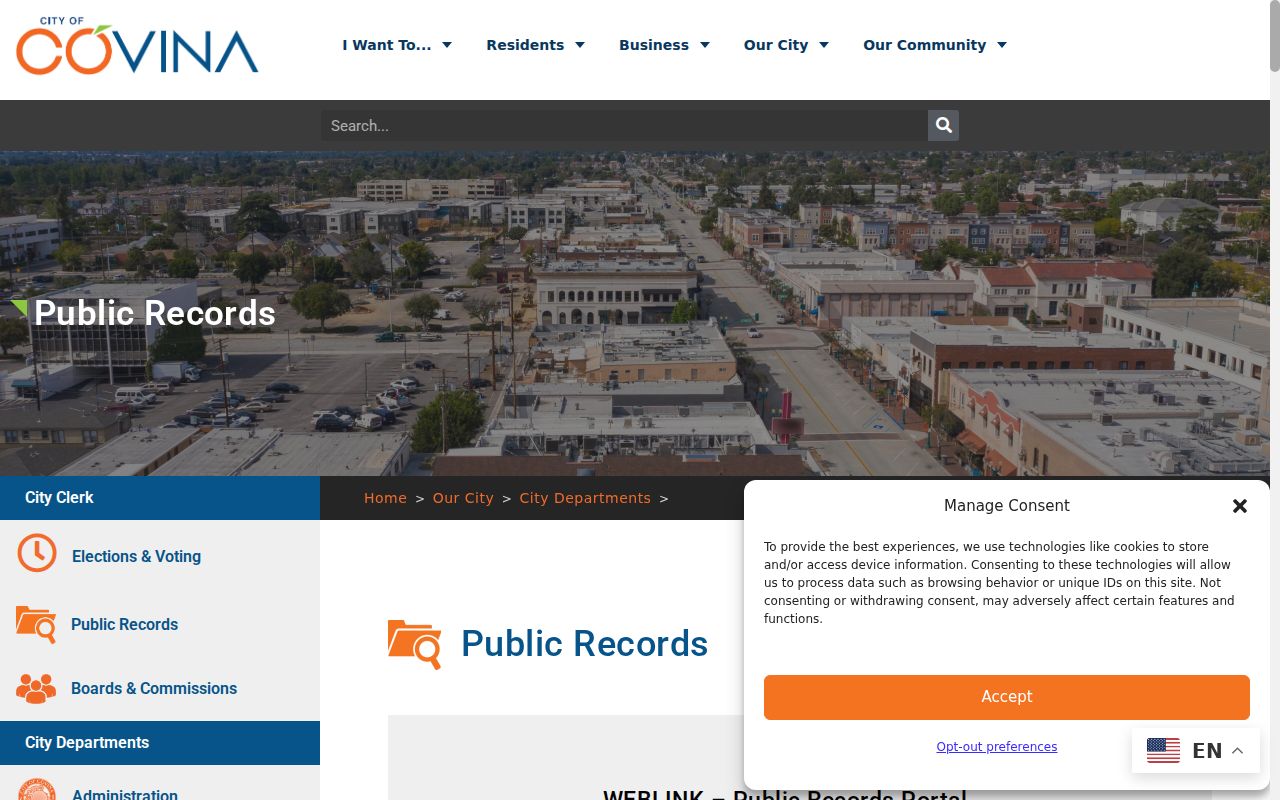
The archive provides a city-level address trail that complements, but does not replace, county property and deed records.
Current Covina Resident Directories Need Careful Labels
There is no single official Covina resident directory. Current records are layered, and each describes a different relationship to a person or place. The assessment roll speaks to parcels and assessed parties. A deed records a transfer. A court index speaks to a case party. A voter tool authenticates one voter's own record. A permit may name an applicant without naming everyone affected by the work.
| Source | What it can show | Keeper | Access |
|---|---|---|---|
| Assessment parcel | AIN, situs, assessed party where public, values and characteristics | Los Angeles County Assessor | Free address or AIN portal |
| Recorded-document index | Grantors, grantees, document type and recording year | Los Angeles County RR/CC | Norwalk index; known-copy orders |
| My Voter Status | Authenticated registration status and election details | California Secretary of State | Self-lookup only |
| Superior Court case search | Party role, case type, filing dates and disposition when shown | Los Angeles Superior Court | Web, kiosk, or clerk copies |
| Business and license filings | Entity roles, agents, license status and address of record | California SOS and DCA | Free public searches |
| City permits and planning files | Applicants, contractors, parcel numbers and project dates | Covina departments | Laserfiche, project files, or CPRA |
Use the source that fits the claim. A property result supports a parcel connection, while a directory entry places a listed subscriber at an earlier date. The Covina resident lookup workflow helps confirm one name.
When Covina Ownership and Residence Diverge
Ownership is easier to document than occupancy. The Assessor may show an assessed owner, mailing address, and situs, but it does not prove who occupies the parcel. Deeds, the 1989 reverse directory, and permits answer separate dated questions.
Compiled data services may merge feeds, charge for access, lag after a move, or confuse similar names. Official sources are narrower but have a custodian and date. Use compiled results only as leads.
| Evidence category | Useful strength | Common gap |
|---|---|---|
| Official parcel, deed, court, or license record | Named custodian, dated record, defined fields | Limited relationship, redaction, or access rules |
| Historical directory or newspaper | Past address, subscriber, family, or civic clue | Publication lag, omissions, and regional coverage |
| Compiled data service | May surface spelling or locality leads quickly | Stale, merged, paid, and not official evidence |
Covina Recorder Records by Name and Year
Los Angeles County's recorder is the key local quirk in a Covina residents directory search. RR/CC maintains real-estate records from 1850 to the present, but the index uses grantor, grantee, and recording year. It is not a public web search by street address or APN. The bridge is address to AIN, AIN to assessed owner, owner to likely year, then owner to grantee in Norwalk.
Real Estate Records viewing is at 12400 Imperial Highway, Room 2207, Norwalk, Monday through Friday from 8 a.m. to 5 p.m. except holidays. Known documents can be ordered in person, by mail, or online through the county's contractor. The request should include a document number, indexed name and year, or document title. Current plain-copy charges are $5 for the first page and $3 for each additional page; certified copies are $6 for the first page and $3 for each additional page.
The Los Angeles County recorder viewing page explains the office channel for the index that cannot be searched by address.
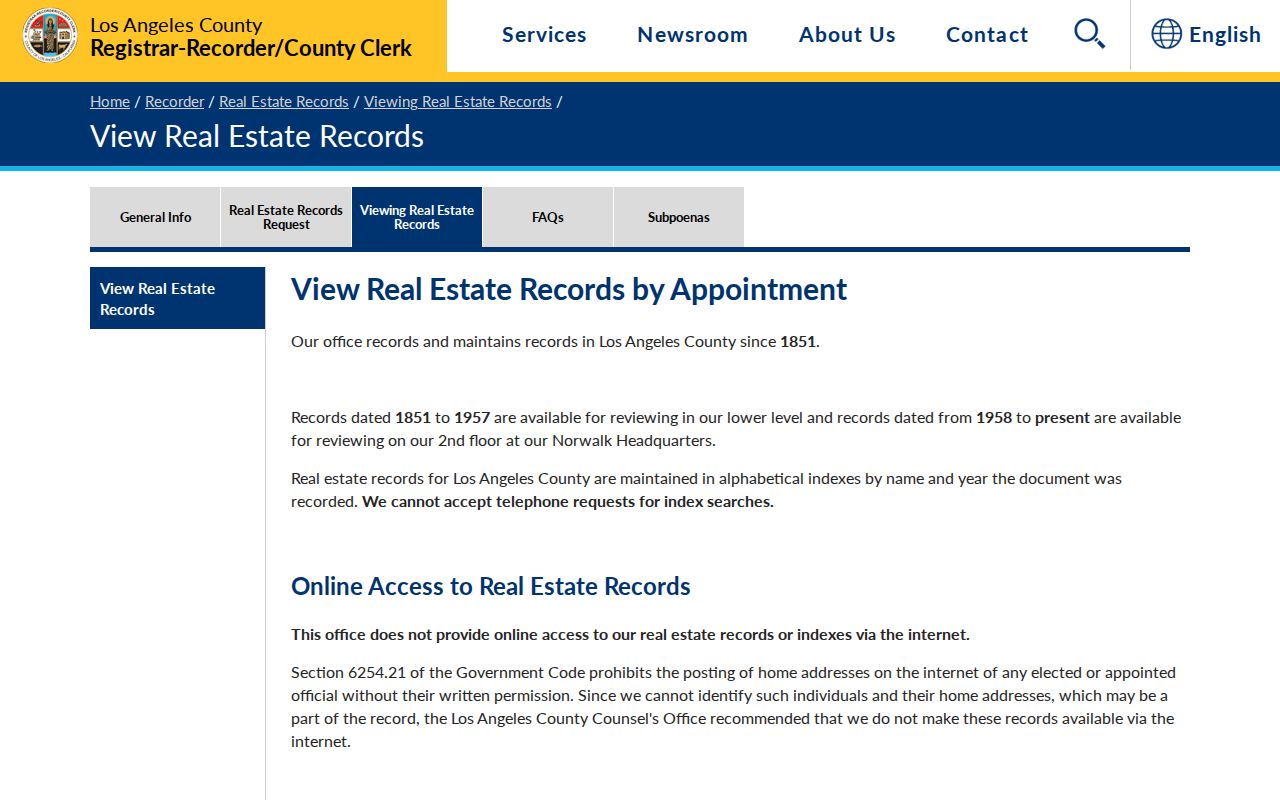
Online copy orders are stated to process within twenty working days, while exploratory research is most efficient at the counter. The recorder's guidance identifies a $0.50 per name per year search charge, so common surnames need a narrow year range.
Note: The deed index identifies recorded parties, not every person who occupies a Covina parcel.
Covina CourtConnect Narrows a Name Match
Los Angeles Superior Court case tools test a name against a real case context. CourtConnect offers case-number, courthouse-calendar, department, and person-or-organization name modes. The Find a Case gateway routes by case type. Name and document services may charge under California Rule of Court 2.506 and Government Code §68150(l); courthouse kiosks and clerk copies provide an in-person fallback.
- Case number. Exact case format, then summary and docket information.
- Courthouse calendar and department. Location, date, department, and calendar results.
- Name, person, or organization. Party-oriented search with applicable fee or login terms.
- Filing courthouse. An optional filter for limited-jurisdiction cases in the case summary.
The LA CourtConnect search screen is useful for checking party role, filing date, case type, status, hearing events, and disposition when entered.
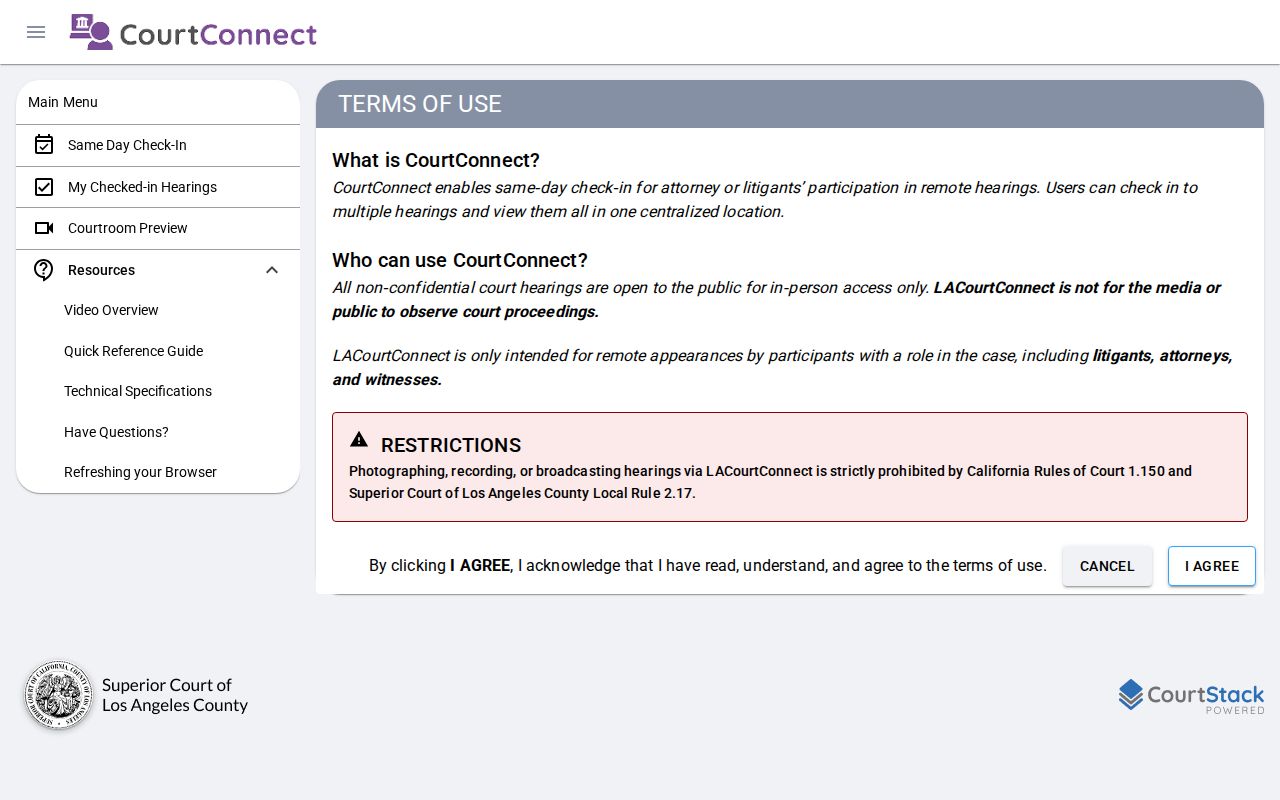
The court's Find a Case gateway routes civil, criminal, probate, family, small-claims, and traffic matters.
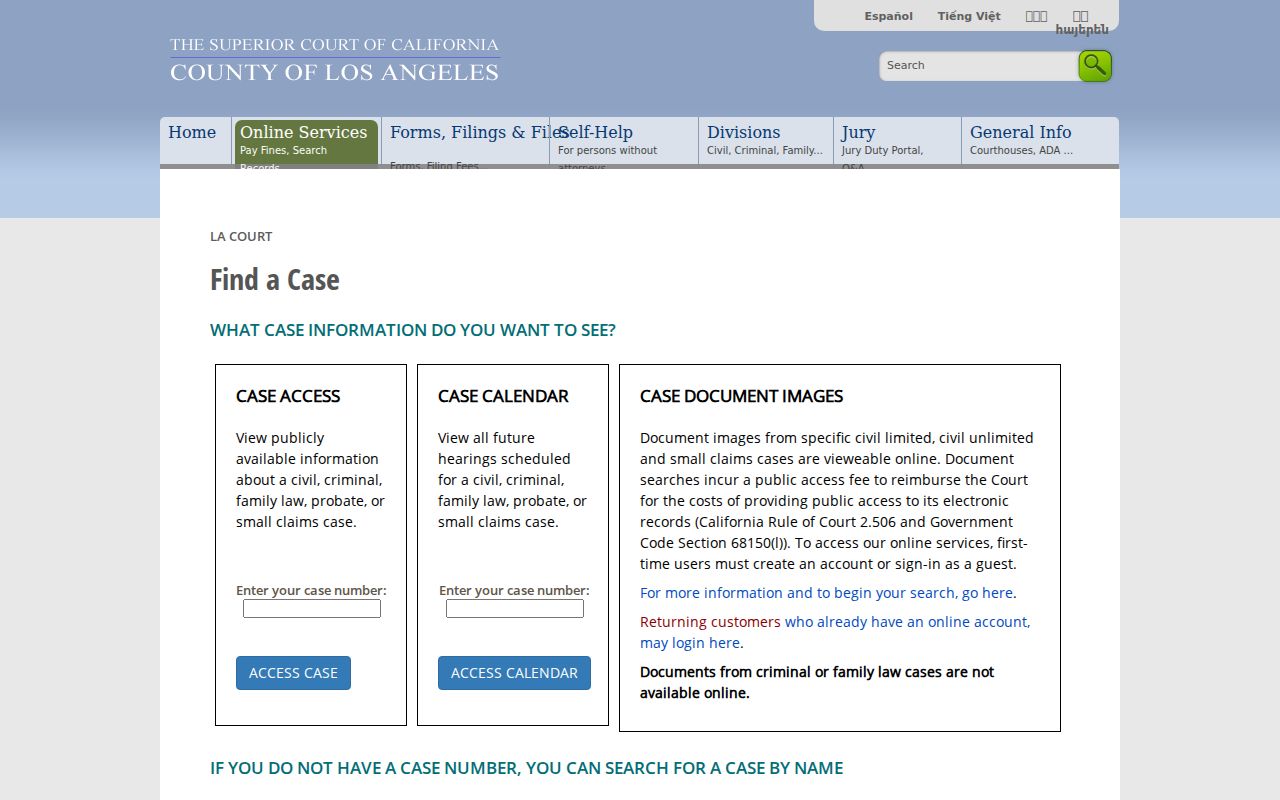
A case-number summary is not the full court record. Sealed, juvenile, adoption, confidential family, and dependency materials have narrower access, and an address in a filed document may not appear remotely.
Covina Vital Copies and the Age-Rule Myth
California vital records do not become open under one universal 100-year or 50-year rule. Los Angeles County RR/CC and the California Department of Public Health divide custody, and the copy type controls access. An informational certified copy can support family history, while an authorized copy requires an eligible relationship, sworn statement, and identity process. Confidential marriages are available only from the issuing county to a party or by court order under Family Code §511. Adoption birth files remain sealed under Family Code §§9200-9203.
For 2026, the state fees are $31 for birth, $26 for death, $19 for marriage, and $18 for dissolution certificates. CDPH requests use its forms and payment by check or money order drawn on a U.S. bank; cash is not accepted. RR/CC provides in-person, mail, and online ordering, with telephone help at (800) 201-8999, option 1. A fee can be retained when no record is found.
The California vital-records applications page identifies the state forms and the authorized-versus-informational route.
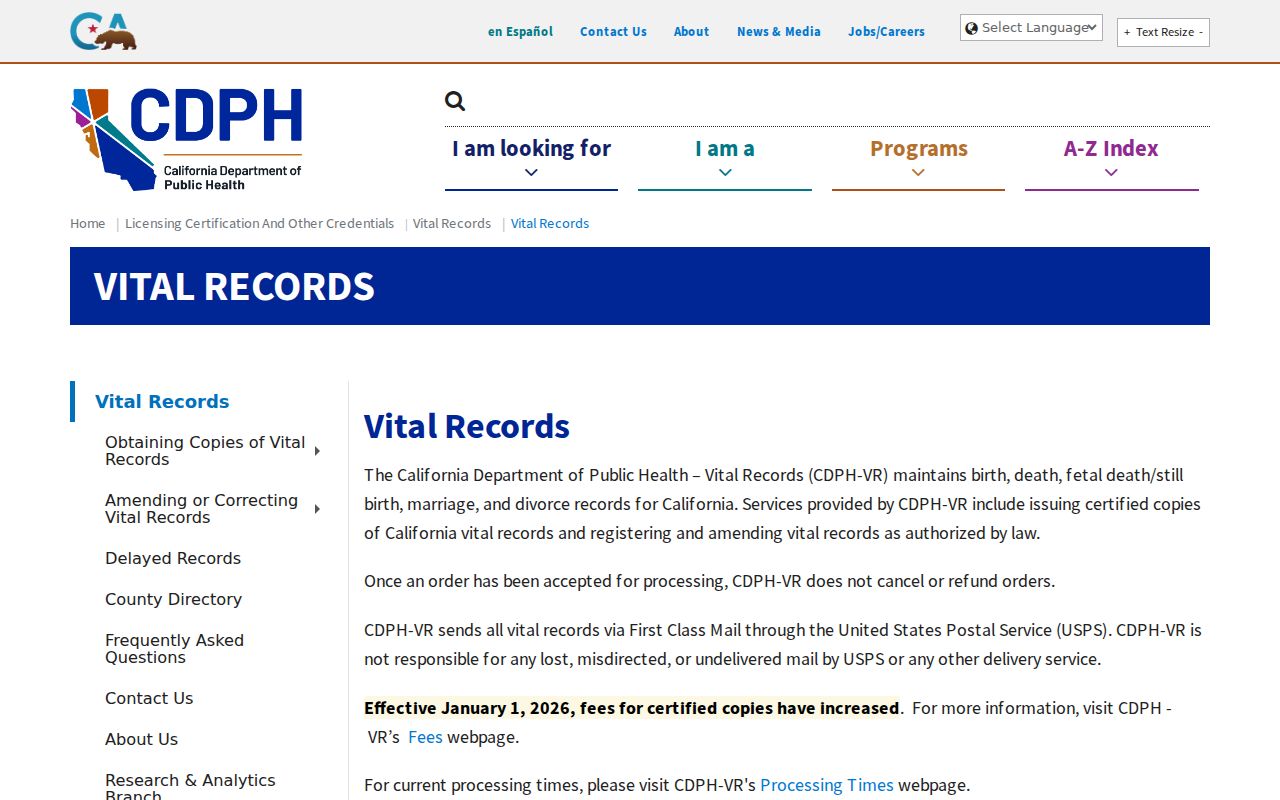
For pre-1905 events, use county registers, church and cemetery records, newspapers, and probate, not a derivative index as an identity-valid certificate.
California Voter Status in a Covina Search
California's My Voter Status tool is a self-check, not a public people finder. It asks for first name, last name, and date of birth, with a California driver license or identification number, last four Social Security digits, county, or ZIP prompts depending on the tool. A successful check can return status, party preference, address, precinct, district, vote-by-mail status, and participation history for the authenticated voter.
Government Code §7924.000 exempts voter information from ordinary CPRA disclosure, while Elections Code §2194 sets the permitted uses and request path. A lawfully obtained file can require an application, identity and organization details, a precise geography, a permitted-purpose declaration, fee agreement, and a signature under penalty of perjury. The county schedule lists $5 per name per year for voter-registration searches. The public tool cannot browse every registered voter along a Covina street, and Safe at Home participants are protected.
The California My Voter Status lookup is the correct route for a person's own registration check.
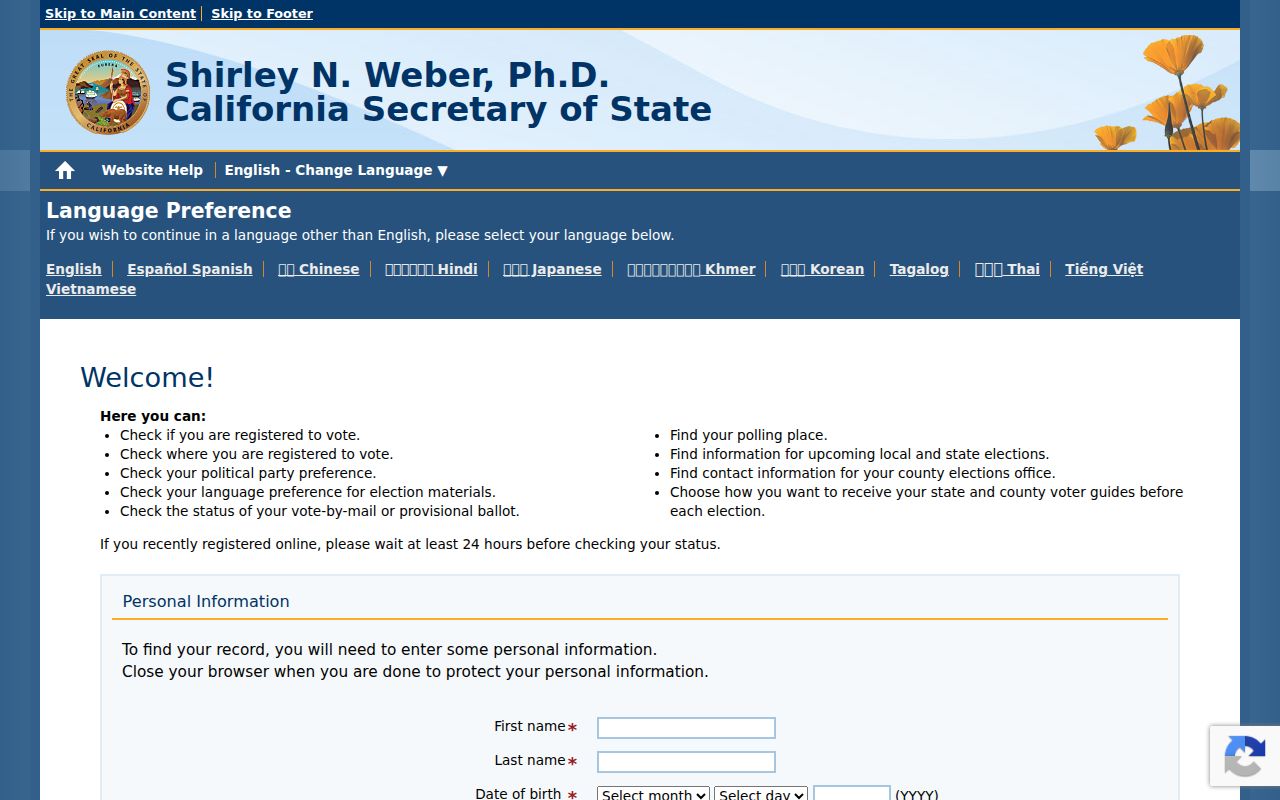
Participation history shows whether a ballot was credited, not how anyone voted. A non-match is a prompt to verify the inputs or contact the county, not proof that a person is unregistered.
Covina Business Records Add Role Evidence
Business and professional filings can confirm a public role connected to a name without turning that role into proof of residence. California Secretary of State bizfile searches by entity name or file number, with filters for entity type, status, and filing date. Results can show formation date, jurisdiction, principal or mailing address, agent, officers, directors, members, managers, filing history, and free plain-PDF images. Ordinary searches are limited to the closest 500 matches.
The California bizfile portal connects Covina to the state filing system. The California Department of Consumer Affairs license search adds board, license type, number, business name, first and last name, registry number, status, dates, address of record, and public discipline. Fictitious business name records and Covina business-license files add local context, but the city has no complete public business-license search in the research.
Use the exact filing or license number when available. An address of record may be a principal office, agent, or mailing location. It corroborates a Covina residents directory search but does not establish residence.
The bizfile landing page shows the state entry point for entity-name and file-number research.
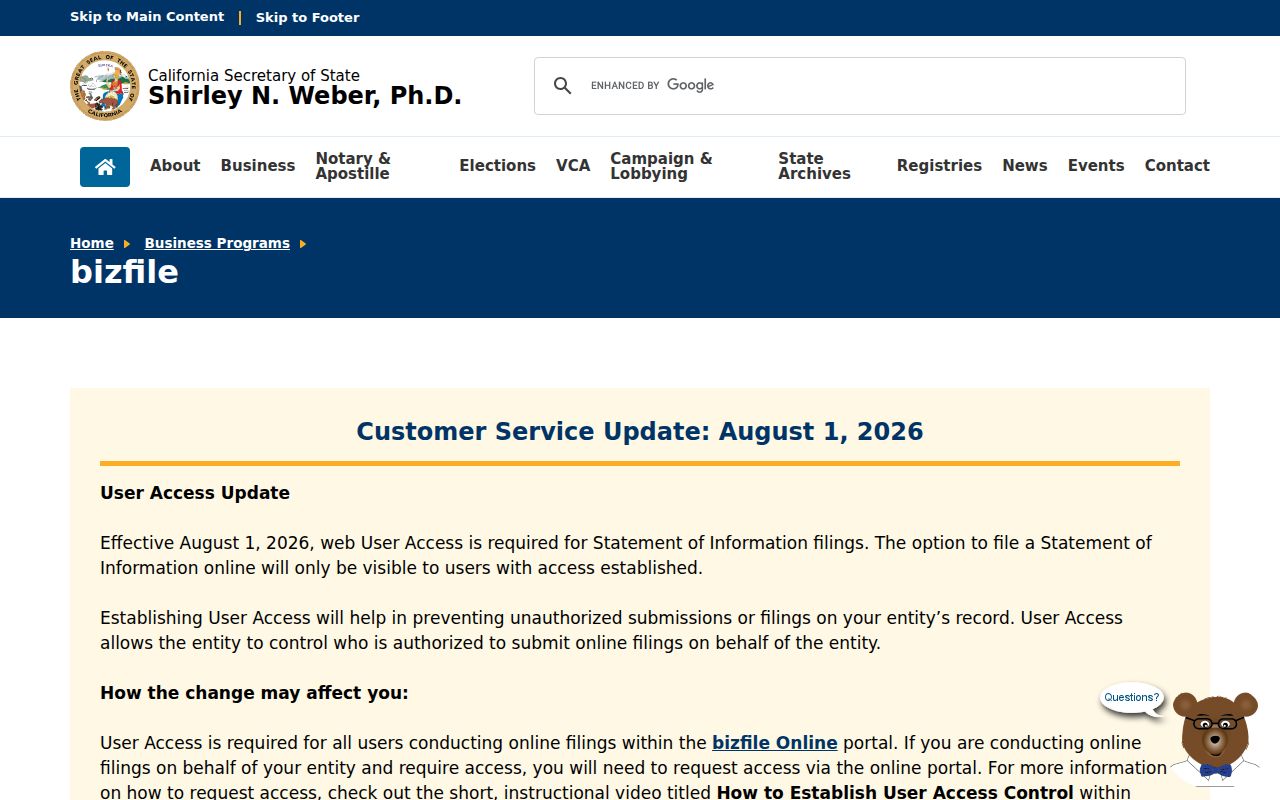
Free filing images can establish a dated business connection, while certified copies and status certificates use the Secretary of State's order process.
Historical Covina Resident Directories and Local Trails
Older Covina residents directories are strongest when the year and format are named. Catalog evidence identifies city-directory editions for 1947, 1949, and 1950, a Baldwin Park, Covina, and West Covina directory for 1955, and a GTE Covina and nearby cities address directory from September 1989. Later regional telephone books reach into the 2000s. Titles may place Covina inside a neighboring regional product, so a title search limited to Covina can miss coverage.
The Covina Public Library is a practical starting point for newspapers, photographs, yearbooks, telephone books, obituary research, and database questions. The Los Angeles County Library Californiana collection in Norwalk holds the verified regional directory inventory. The Covina Valley Historical Society's Firehouse/Jail Museum and H.H. Dorjean House can add clippings, family files, school material, and local ephemera by staff request. The historical shelf and its address-first reading method receive fuller treatment in the Covina city directory collections page.
Pair a 1950 directory with the 1950 census for household and address clues. The 1960 census remains closed until 2032, so deeds, permits, newspapers, directories, and probate bridge the gap.
Where a Covina Residents Directory Trail Ends
Public records are shaped by purpose and privacy. People who do not hold title may never appear in a deed or assessment roll. Household members, unlisted subscribers, children, and people protected through Safe at Home can be absent from public results. Sealed court material, adoption files, confidential vital records, and DMV personal data have separate restrictions. A missing result is not proof that a person is absent from Covina.
California's CPRA, Government Code §§7920.000 et seq., remains a fallback for a specific city or county record, but it does not require an agency to create a profile. The California Consumer Privacy Act and the DELETE Act's DROP process address commercial data rights, while custodian-specific rules govern public-record corrections.
Lawful personal use. Covina records support family history, civic research, reconnecting, estate work, and ordinary record verification. Do not use a name, address, or record to stalk, harass, intimidate, or harm another person.
Note: Verify a meaningful match with the office that holds the record, especially when a name, address, or date is common.